

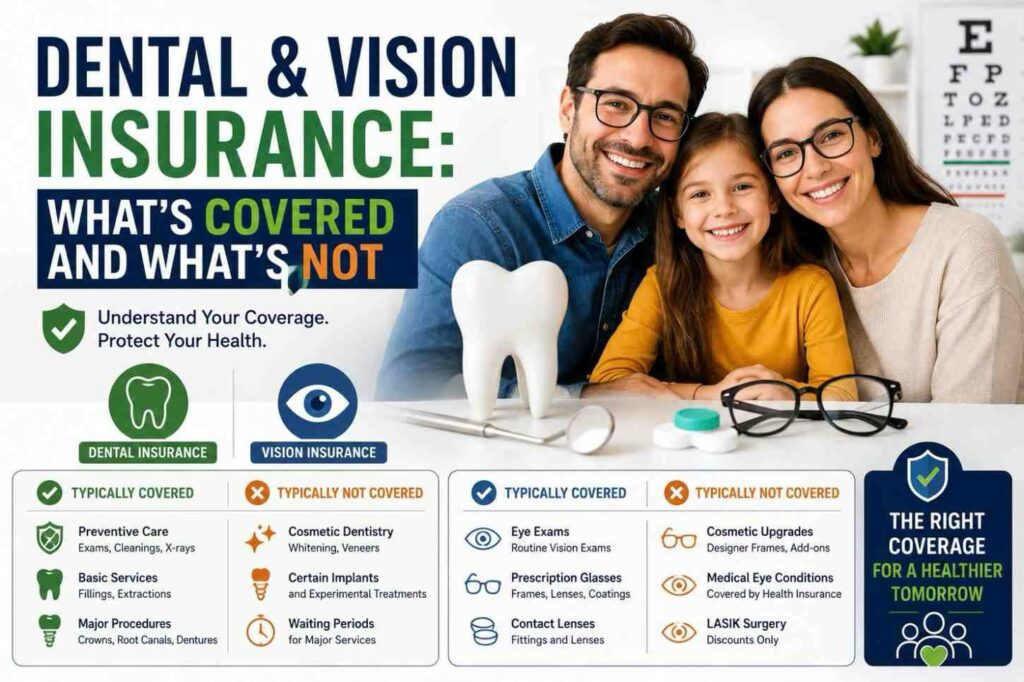
Dental and Vision Insurance: What’s Covered and What’s Not
Many assume regular health insurance automatically covers dental and vision — it usually doesn't. Eye exams and glasses may be partly covered, but root canals or braces often aren't included at all. Understanding exactly what dental and vision insurance covers, and what it doesn't, helps individuals, families, seniors, and self-employed people avoid surprise costs and plan their long-term health care.
This guide seeks to explain: mentioning how different the most basic level of dental and vision insurance is, multiple coverage limits, and ways of comparing different plans, and where to find affordable protection for families.
Why Dental and Vision Insurance Matter
These days, dental and vision care are among the biggest pillars in maintaining good health. A regular checkup can lead to early detection of problems before they turn into something expensive.
Crippling dental problems can bring to mind:
- Heart disease
- Diabetes complications
- Infections
- Chronic inflammation
Vision exams can also detect:
- Diabetes
- High blood pressure
- Glaucoma
- Cataracts
- Retinal problems
Many without proper coverage simply forego routine care out due to the “cost” factor with bigger health expenses later on.
Does Regular Health Insurance Cover Dental and Vision?
In the main, traditional health insurance plans offer relatively minimal dental and vision coverage for adults. While the pediatric dental care benefit often forms part of Affordable Care Act (ACA) plans for children, adult dental and vision benefits typically come in the form of separate add-on or standalone policy. This suggests that many adults will need altogether separate dental and vision plans for benefit from comprehensive protection in this regard.
What Dental Insurance Typically Covers
Therefore, dental benefits are designed for preventive, basic and major dental care services. Insurance policy provisions can vary from one insurance company to another and between plan types as well, but a lot of dental benefit packages are categorically designed from the following three bins:
Preventive Dental Care
Preventive treatments are covered at the highest level: these are among the services insurers want in place to encourage annual visits.
These services often include:
- Routine dental exams
- Professional cleanings
- X-rays
- Fluoride treatments
- Preventive screenings
Many plans cover preventive care at 100% when services are rendered by in-network providers.
Basic Dental Services
Usually, basic services can apply like such:
- Fillings
- Simple extractions
- Periodontal treatment
- Basic restorative work
Planning will cover one’s rates or a portion thereof, while the remaining balance gets paid by the patient.
Major Dental Procedures
Major services can consist of:
- Root canals
- Crowns
- Bridges
- Dentures
- Oral surgery
Coverage for major procedures can be up to ninety percent in certain cases, but other plans make you wait for a certain period of time before the use of these services is facilitated.
What Dental Insurance Often Does NOT Cover
Many consumers get surprised upon the discovery that in dental insurance, there are limitations.
Common exclusions may include:
- Cosmetic dentistry
- Teeth whitening
- Veneers
- Certain implants
- Experimental procedures
And some plans indicate the following:
- Annual maximum limits
- Waiting periods
- Network restrictions
- Frequency limitations for cleanings and exams
Before making an ABSOLUTE decision to go into it, please read the entire policy carefully.
What Vision Insurance Typically Covers
Vision insurance works to reduce the cost of all correction and eye care services.
This typically includes such things as:
Eye Exams
A routine eye examination is crucial-ones for monitoring changes in vision as well as early detection of eye diseases.
Prescription Glasses
Most plans will contribute to some extent in paying the following expenses:
- Frames
- Lenses
- Lens coatings
- Progressive lenses
The amount of coverage provided will vary depending on the plan.
Contact Lenses
Some plans provide allowances for:
- Contact lens exams
- Contact lens fittings
- Contact lenses
Discounts on Vision Services
Certain plans also offer discounts for:
- LASIK surgery
- Additional eyewear
- Specialized lenses
What Vision Insurance Often Does NOT Cover
The same goes with the dental plans, but be sure you read that all exclusions and limitations shall apply under your vision insurance policy.
Most common non-covered items listed are:
- Cosmetic lens upgrades
- Certain designer frames
- Experimental treatments
- Medical eye conditions under separate health insurance rules
There come times when most medical eye issues will be treated under general instead of vision insurance.
How Dental and Vision Plans Work
Dental and vision plans typically operate using provider networks.
In-network providers usually offer:
- Lower negotiated pricing
- Reduced out-of-pocket costs
- Better coverage percentages
Out-of-network providers may result in:
- Higher expenses
- Limited reimbursement
- Additional paperwork
One shall have to always make verification of provider participation in network prior to scheduling an appointment.
Individual Plans vs Employer Coverage
The former might get dental and vision insurance from, say, an employer’s benefits. It may also be available separately.
Employer-Sponsored Plans
Employer plans often provide:
- Lower premiums
- Group pricing advantages
- Simplified enrollment
Individual Plans
Individual plans offer flexibility for:
- Self-employed workers
- Freelancers
- Retirees
- Families without employer coverage
It is therefore very important to determine the benefits that individual plans can offer through a considerate comparison of various health insurance plans.
How to Choose the Right Dental and Vision Insurance Plan
Therefore, the best plan is highly dependent on the health care requirements and is often considered based on the cost or provider; here are the main points from an insurance policy.
Monthly Premiums
Lower premiums may come with:
- Higher deductibles
- Limited coverage
- Smaller provider networks
Coverage Limits
Review:
- Annual maximum benefits
- Coverage percentages
- Procedure limitations
- Waiting periods
Provider Networks
Always verify:
- Dentists
- Orthodontists
- Eye doctors
- Vision centers
Family Needs
Families with children may prioritize:
- Orthodontic coverage
- Pediatric dental services
- Multiple eye exams
- Affordable family plans
Common Mistakes People Make
People tend to pick a plan without understanding the full scope of its constraints. We have provided a list of the most common mistakes individuals make.
Assuming All Procedures Are Covered
Cosmetic procedures and optional treatments are not included in dental and vision plans.
Ignoring Waiting Periods
While some procedures have to have a waiting period before they become eligible for payment as part of a plan’s major dental work.
Choosing Based Only on Premium Cost
You would have more out-of-pocket expenses if you make the cheaper plan.
Not Reviewing Provider Networks
There are plans that don’t have your favorite dentist or eye doctor as part of their cover.
Why Dental and Vision Insurance Can Save You Money
Prevent dental and vision health care costs that are very high at a future time in your life.
Regular dentist visits may help prevent:
- Severe infections
- Tooth loss
- Expensive restorative procedures
Regular eye exams can also facilitate:
- Vision changes
- Chronic health conditions
- Eye diseases early
There is an option for insurance, however, that can greatly alleviate long-term healthcare costs.
Dental and Vision Coverage for Seniors
Many surprise of Original Medicare users: it does not cover routine dental or vision services usually.
Thus, many seniors purchase the following:
- Medicare Advantage plans with dental and vision benefits
- Standalone dental plans
- Standalone vision plans
Such choices make retirees capable of the most effective control of the costs of all health care needed.
Why Working With an Insurance Agent Helps
Dental and vision plans among providers may be extensive. A professional agent is able to assist you in:
- Compare plan options
- Review coverage limitations
- Understand waiting periods
- Check provider networks
- Estimate total costs
- Find affordable family coverage
So, professional insight simplifies the enrollment process and reduces confusion.
The Bottom Line
Both dental and vision insurance are supporting systems that can ensure the protection of a person’s health and resources. The correct coverage has the potential to lower costs:
- Routine checkups
- Preventive care
- Prescription eyewear
- Major dental procedures
- Family healthcare expenses
In 2026, you will be able to take better health decisions when you know the underwritten benefits, exclusions and workings of different plans.
Call to Action
Need assistance in finding modest dental and vision insurance? Are you in danger of needing dental and vision insurance? Let Madrinas Insurance help you compare plans and understand coverage options. Let us help you be protected for the investment you’ve made in healthcare-and within your budget.
Contact our team today for a no-cost insurance consultation.
Related Links
- Affordable Family Health Insurance
- Medicare Coverage Options
- Obamacare Enrollment Assistance
- Private Health Insurance Plans
- Health Insurance for Self-Employed Workers
FAQ
Surely, is there a dental and vision coverage that can be appended from your health insurance?
Typically, health insurance and vision insurance are packaged by a dental plan that an individual can purchase either on their own or as an additional benefit.
What then is extensive coverage within dental insurance?
Preventive care services and basic services are generally covered, with major dental services sometimes including crowns and root canals.
What kind of glasses and contact lenses can be expected under your vision coverage?
Many vision plans offer allowances for prescription eyeglasses, contact lenses, and even for eye checks.
Does dental insurance cover braces?
A few plans include orthodontic benefits as part of the plan, but the benefits aren’t generally widespread and are often accompanied by age limits.
Is it worth buying dental and vision insurance?
For many people and families, hence this insurance is beneficial because it lessens the greater price of preventive care and gives people peace of mind against higher health expenses in the future