

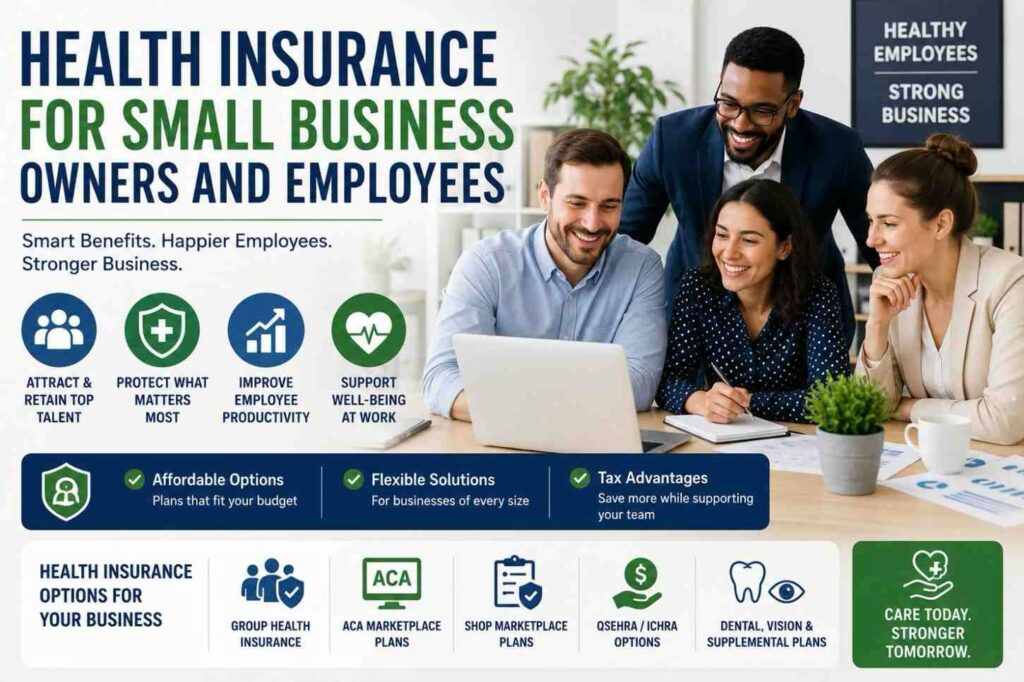
Health Insurance for Small Business Owners and Employees
On the other side, with the stiff rivalry hovering across the job market, health insurance has turned out to be one of the few facilities small businesses are vital to provide its workers. For business people, having healthcare schemes will not only attract and retain quality employees but it will also protect employees, stabilize the workplace, and strengthen the foundation of the business toward direction and development.
Additionally, owing to altering laws, changing insurance market conditions, confusing group plan structures, ACA guidelines changes, and tax deductions, most small business owners find it hard to understand what is best concerning healthcare for themselves and their teams. Because of out-of-control increases in the healthcare sector as well, the early high demands of workers turn into one big nightmare policy experience.
There is a current very good thing: affordable health insurance programs that will suit small businesses fit in 2026. If you are touch-and-go with new business ownership, then you will find an affordable rate for small group insurance coverage. The same is true for self-employed entrepreneurs who are diversifying business interests. If you are one of the family-based firms, you do not have to play such highly defensive policies for rendering all the possible definitions of benefits.
A complete resource guide for small business owners and employees gives extensive information about small business’s health insurance options, how group health coverage works, good ways of cutting costs as well as finding the best Valley health care solution for their businesses.
Why Health Insurance Matters for Small Businesses
Health care benefits offer several things to both Employers and Employees. Among other things, health insurance provides employees as follows:
- Access to medical care
- Financial protection during emergencies
- Preventive healthcare services
- Prescription drug coverage
- Peace of mind for families
For the employers, offering health care benefits can help advance:
- Attract qualified employees
- Improve employee retention
- Increase workplace satisfaction
- Reduce turnover
- Strengthen company reputation
Health benefit programs are pretty much what everyone has to have within their sectors today, not just the optional ones.
Health Insurance Options for Small Businesses
What with the range of small business owners, there are many options for healthcare available to them. Primarily these options for many small businesses become active as the company grows, evolves, and even depends on company size, budget, and employee structure.
These choices include popular options in group health insurance plans.
- Group health insurance plans
- ACA marketplace plans
- Qualified Small Employer Health Reimbursement Arrangements (QSEHRAs)
- Individual coverage reimbursement arrangements
- Private insurance plans
- Supplemental coverage options
Choosing between them is a matter of identification with your workforce needs and financial goals.
Group Health Insurance Plans
This is still perhaps the most favored method of providing healthcare for employees in the small-business sector. Small Business Owners included these plans to offer healthcare coverage for their employees and, sometimes, their dependents.
Benefits of Group Health Insurance
Benefits typically found in group plans include:
- Shared premium costs
- Better employee retention
- Tax advantages
- Access to broader provider networks
- Comprehensive healthcare coverage
Additionally, group plans smoothen the administrative troubles present in the process.
What Group Plans Typically Cover
Groups generally cover group health insurance in respect of:
- Doctor visits
- Hospitalization
- Emergency care
- Preventive services
- Prescription drug coverage
- Mental health services
In some cases, they even provide:
- Dental insurance
- Vision coverage
- Wellness programs
ACA Health Insurance for Small Business Owners
Individual ACA marketplace coverage can be selected by some small business owners instead of traditional group health plans.
Most notably, this demographic includes:
- Self-employed individuals
- Freelancers
- Businesses with very few employees
- Startups controlling costs
ACA Subsidies Can Lower Costs
One major advantage of Obamacare marketplace plans is financial assistance eligibility.
Depending on household income, business owners may qualify for:
- Premium tax credits
- Lower deductibles
- Reduced out-of-pocket costs
For the number of small trade people, ACA insurance is more affordable compared with group policies within the public sector.
SHOP Marketplace Plans
The Small Business Health Options Program (SHOP) is designed specifically for eligible small businesses.
SHOP plans may offer:
- Group healthcare plans
- Tax credit eligibility
- Employee coverage flexibility
Additionally, small businesses having fewer than 25 employees might be given the benefits of tax credit through wage and contribution requirements for eligibility.
Health Reimbursement Arrangement (HRA)
The refunding of healthcare expenses, on the other hand, is the option taken by some employers instead of giving a healthcare plan to the employees.
QSEHRA Plans
Qualified Small Employer Health Reimbursement Arrangements allow eligible small businesses to reimburse employees for:
- Individual health insurance premiums
- Qualified medical expenses
This option offers flexibility while helping employers control healthcare spending.
ICHRA Plans
ICHRA or Individual Coverage Health Reimbursement Arrangement is designed for all sorts of establishments, supporting businesses regardless of dimensions in allocating top-up reimbursement for workers purchasing individual healthcare plans.
Future regulations would reduce complexity while therapeutically meeting the issues of employees.
How Much Does Small Business Health Insurance Cost?
Healthcare costs vary based on several factors.
These include:
- Number of employees
- Employee ages
- Geographic location
- Coverage type
- Employer contribution amounts
- Plan structure
Health care costs are usually shared according to the employer’s base unless contribution percentages differ. It’s intended that every health benefit really should provide the optimal balance between cost effect.
Tax Benefits for Small Business Owners
Entrepreneurs with cash value from small businesses may gain other tax benefits by offering insurance under their employees’ heads.
Such Tax benefits may include:
- Deductible employer contributions
- Small business healthcare tax credits
- Self-employed health insurance deductions
Different legal regulations apply which is contingent on the structure of a company of healthcare it chooses. It is therefore advisable to have a conversation with a tax advisor.
What Workers Want from Health Care Coverage
Employees tend to look beyond just monthly premiums when assessing health benefits.
Some of the most important things they evaluate are:
- Affordable deductibles
- Strong provider networks
- Prescription drug coverage
- Family plan availability
- Dental and vision benefits
- Access to specialists
This going to have a big impact on company morale and will improve long-term retention of personnel.
Small Business Owners’ Common Mistakes
Many businesses make healthcare decisions based only on upfront pricing.
Here are common mistakes to avoid.
Choosing the Cheapest Plan Only
Low-cost plans may result in:
- High deductibles
- Weak provider networks
- Poor employee satisfaction
- Higher out-of-pocket expenses
Ignoring Employee Needs
Healthcare needs vary between employees, families, and age groups.
Failing to Compare Plans Annually
Healthcare plans and pricing change every year. Reviewing options annually helps businesses avoid overpaying.
Not Understanding Tax Opportunities
Many employers miss valuable healthcare-related tax deductions and credits.
Trying to Handle Everything Alone
Healthcare regulations and plan structures can become extremely complicated without professional guidance.
How to Choose the Right Small Business Health Insurance Plan
To suit your business goals and workforce structure, the optimal choice is narrowing down.
In contrast to plans, research should be a review on:
Monthly Premiums
Take into account balance concerning cost, and quality of cover.
Preexisting Conditions that Have Membership in Them
It is very much job involved wanting to control this clause in light of its consequences in the world.
Provider Networks
You are usually given a chance to join after your employer drops their coverage.
Prescription Coverage
Evaluate medication costs and pharmacy access.
Employee Participation Requirements
Some group plans require minimum employee participation levels.
Why Working With an Insurance Agent Helps
Small business healthcare planning involves multiple moving parts.
A licensed insurance advisor can help:
- Compare group plans
- Review ACA options
- Estimate business costs
- Understand tax benefits
- Evaluate provider networks
- Build affordable employee benefit packages
Professional guidance often helps businesses reduce confusion, save money, and avoid enrollment mistakes.
Healthcare Benefits Help Businesses Grow
Purchasing medical insurance is an investment, and not just another expense. For many, it is a long-term investment in their workforce’s stability and the progress of their company.
Good medical insurance benefits will increase:
- Improve recruitment
- Increase retention
- Reduce absenteeism
- Strengthen employee loyalty
- Improve workplace productivity
Lately, more engaged workers are those who feel they are being well provided for and are truly committed to the company.
The Bottom Line
Healthcare options are available today for small-business owners more than many might realize.
Whether you choose:
- Traditional group health insurance
- ACA marketplace coverage
- HRA reimbursement strategies
- Supplemental benefits
Therefore, the right healthcare solution would protect one’s business while looking after employees. Many times it can involve balancing a good comparison and understanding healthcare costs and tax advantages to forge a sustainable employee benefits strategy in 2026.
Call to Action
Need help finding affordable option for employees and a small business health insurance consultant? Madrinas Insurance can help you compare plans from various carriers, such as various group plans, ACA options, health options, and even self-funded reimbursement strategies.
Just get in touch with a free long-term care insurance help services consultant today.
Related Links
- Affordable Family Health Insurance
- Health Insurance for Self-Employed Workers
- Obamacare Enrollment Assistance
- Dental and Vision Insurance
- Medicare Coverage Options
FAQ
Yes, it is entirely possible for a tiny firm to give staff health insurance benefits.
Yes, several group health insurance benefits might serve small businesses, especially such as a health reimbursement arrangement and the Health plans under the Affordable Care Act.
What would be the most appropriate health insurance for small firms?
That depends on the company’s size and the needs and pockets of its employees along with tax concerns.
Can a small business health insurance premium be included in tax deductions?
Usually, different employer health insurance contributions would be considered as possible deductible business costs.
What is a QSEHRA?
It is a kind of Qualified Small Employer Health Reimbursement Arrangement-a health plan innovation with a tax-free scheme, under which an employer can reimburse eligible employees for their out-of-pocket medical expenses and premiums.
Can self-employed business owners get ACA subsidies refused?
However, a large percentage of small businesses do qualify for tax credits under Obamacare if their household water incomes are low.